Hardwoods or Softwoods?
Softwoods like fir, spruce, and pine are less expensive than hardwoods. Softwoods are easier to ignite and burn rapidly with a hot flame.
If you want a quick-warming fire that will burn quickly, softwoods are your best choice. However, if you’re a serious wood burner using a catalytic wood burning stove, hardwoods are the best choice.
Hardwoods such as oak and birch provide a longer-lasting fire with a shorter flame.
A mixture of softwoods and hardwoods can be used for easy starts and long lasting burns.
All woods should be season dried before burning in order to provide the cheapest, cleanest, and safest fire.
Note: Never burn rubbish, chemically treated wood such as discarded railroad ties, utility poles, and old yard fences. All emit poisonous fumes and could add to those materials that collect in the chimney, increasing the possibility of a chimney fire.
Note: Never burn coal in your catalytic stove. Never burn artificial or manufactured logs, which are composites of sawdust, chips, colorful chemicals, starch binders, and wax.
They might do harm to the catalytic combustor.
“Burn only season dried wood”

Friday, January 28, 2011

Tuesday, January 25, 2011
Don't poison the catalytic combustor in your woodburning appliance?
The catalyst was designed to burn seasoned dried wood only. Burning garbage, painted wood, product with glue, plastic, rubber, large amounts of colored paper, petroleum products and other foreign materials will poison your unit if done on a regular basis.
Eliminate all doubt on this subject,
BY BURNING ONLY SEASON DRIED WOOD.
Eliminate all doubt on this subject,
BY BURNING ONLY SEASON DRIED WOOD.
Friday, January 21, 2011
What assurance do I have the catalytic combustor will last in my E.P.A. certified stove?

You will be given a prorated limited lifetime warranty from Applied Ceramics which states, Applied Ceramics warrants to the consumer who purchases a Firecat Versagrid catalytic converter as a component in an E.P.A. certified solid fuel appliance, to replace at no charge to the consumer the Versagrid catalytic converter that ceases to function within three (3) years from the date of purchase by the original consumer, providing we receive a dated copy of the original bill of sale for the stove, along with the original Firecat catalytic converter. Applied Ceramics also offers special prorated prices on the converter for the 4th, 5th and 6th years of the stove's life if ever needed.
We couldn't make this offer, if we had doubts about the longevity of the unit.
Tuesday, January 18, 2011
What advantages are provided by a Firecat™ combustor?

90% LESS POLLUTION* - Gases and particles in smoke cause air pollution. The combustor eliminates 90% of this pollution by burning these gases and particles before they exit the stove.
90% LESS CREOSOTE* - Condensation of smoke in chimneys and flues creates creosote build up which is the primary cause of chimney fires. The combustor reduces this danger because it burns most of the smoke and reduces creosote accumulation as much as 90%.
However, you should continue to inspect your chimney regularly for safety.
* Performance may vary depending on stove design, operation and combustor age.
Friday, January 14, 2011
When is it necessary to clean the catalytic combustor in your stove?

Normally your catalytic combustor requires little or no maintenance. Because it generates such high temperatures it is basically self-cleaning when the stove is operated correctly.
After the first burning the combustor should have a light gray powdery appearance.
Should the combustor’s cells become masked with fly-ash, use a paintbrush or soft-bristled brush and dust the combustor gently.
Never use anything abrasive to clean the combustor. A vacuum cleaner may be used, but never use high pressured air to blow the cells free of any build-up. Any cell blockage can be removed with the use of a pipe cleaner or a cotton swab.
Should the combustor become masked with soot or creosote it is possible to burn the accumulation off by opening the bypass and building a hot fire. Once the hot fire is created, close the bypass halfway and burn for 30 to 60 minutes with the bypass in this position.
However, it might be wise to check and clean the combustor, if necessary, before each burning season and inspect all flues for creosote build up.
Cleaning the flue when necessary helps prevent chimney flue fires.
Tuesday, January 11, 2011
How to tell if the combustor is working or not?

Note: some stoves are equipped with a combustor view port, it should be noted that the combustor usually glows during the first 20 to 35% of the burn cycle when the catalyst is receiving the most smoke and burning at a high temperature. The combustor temperature can reach 1000 F. and produce a glow.
However, the combustor does not have to glow to be working. As less smoke is present to burn, the combustor temperature drops and the glow will cease. Therefore, it is suggest this not be a method of determining whether or not the combustor is working.
-The best method is the use of thermo couplings and following the manufacturer’s instructions.
This method will read the inlet and exhaust temperatures of the combustor.
-A more simple method is to visually observe the exhaust coming out of the chimney. When the by-pass is in the closed position and the catalytic combustor is in good operating condition,
there should be no dark smoke coming out of the chimney.
-If the catalytic combustor is not working properly, the stove’s operator will notice an increase infuel usage.
-The stove’s operator will also notice an increase build-up of creosote in the system.
Friday, January 7, 2011
How long should the combustor last before it is necessary to replace it?

The life expectancy of the unit is around 6 years. However, units have been reported to have lasted as long as 10 years. It is recommended the unit be changed out every 6 years for maximum efficiency of the stove.
Tuesday, January 4, 2011
Firecat combustors stop wasted energy.
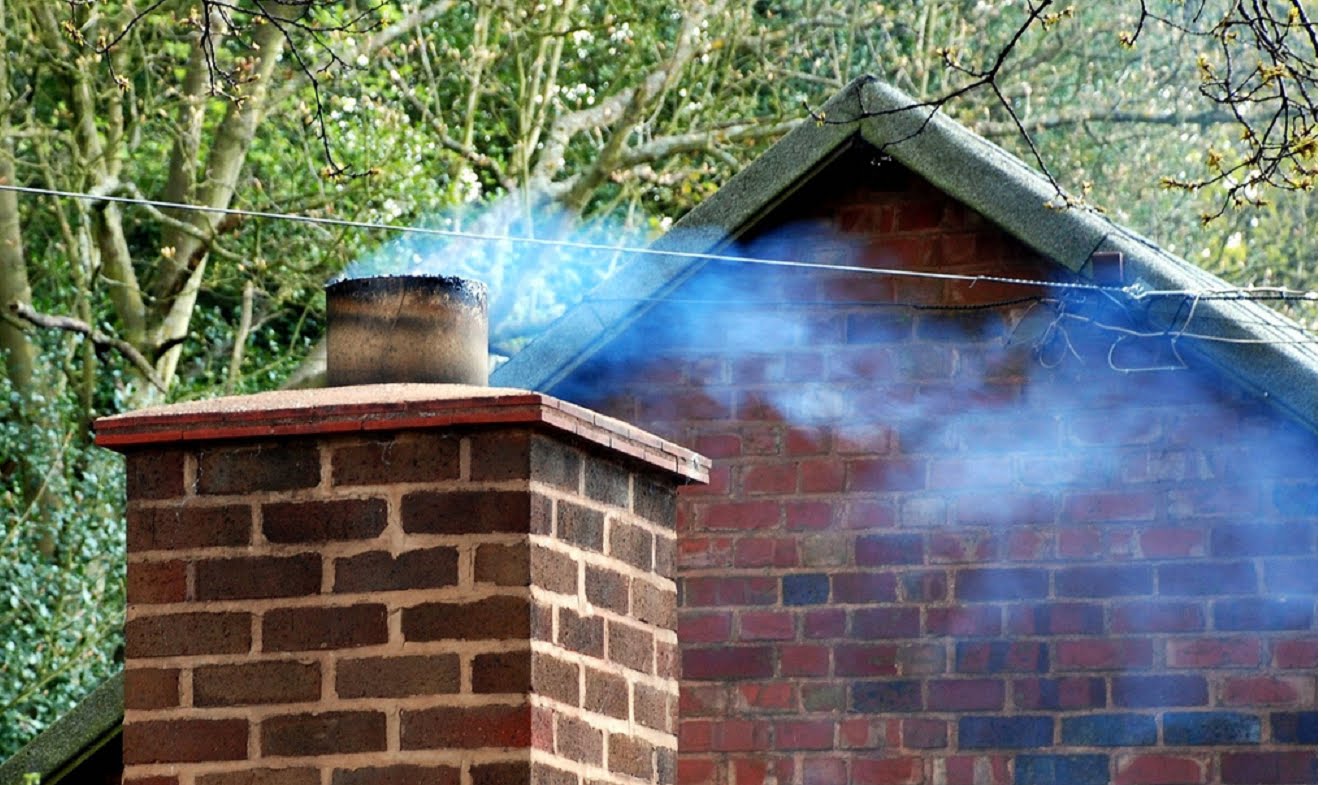
Five to thirty percent of the chemical energy contained in every log escapes up the chimney when the wood is burned in a conventional airtight stove.
However, Firecat catalytic combustors are designed to make use of this energy, converting it into useful heat as it lessens chimney creosote build up and air pollution. When wood smoke contacts this catalyst, chemical changes occur that cause the smoke to ignite at temperatures around 500° F. (260° C.) - temperatures easily found in a wood-stove firebox. Normally, smoke will ignite and burn at temperatures around 1000° F. (540° C.) It is important to make sure the catalytic combustor has achieved light-off before closing the stoves bypass damper. In general, the catalytic combustors needs 500° F. (260° C.) focused on it for 20 to 30 minutes to achieve light-off when initially building a fire in your stove. The bypass damper can then be closed directing the gases through the combustor . At this point the exhaust temperature of the combustor will rise to a range between 1000° F. to 1600° F. indicating the smoke is burning. 1200 to 1400° F. (650-760° C.) should be maintained as the operating temperature of the catalytic combustor.
Saturday, January 1, 2011

Subscribe to:
Posts (Atom)