As a consumer myself, I don't like being ripped off nor do I like a vendor giving me a lot of hype about their product. I write this article because this is exactly what I see happening to you when your shopping for a replacement catalytic combustor for your woodburning stove. Trust me, I know because I have sold catalytic combustors for 20 years to stove manufacturers, dealers, and consumers. I also know what they should sell for at reasonable prices.
I'm not talking about quality of the product, I strictly talking price. All catalytic combustors for wood burning appliances are EPA approved and have basically the same noble metal coatings. Therefore, I am not promoting any manufactures product. I just want you to beware of the so called "sale price" and other hype you see when trying to buy a replacement catalytic combustor for your wood burning appliance.
Here are just a few examples that I ran across on-line:
1. I noticed on e-Bay a seller offering combustors for a so called "special price". They say, the retail price is $163.79 and are telling the consumers they will save $45.69. I take this to mean the consumer pays $118.10. However, the manufacturer sells the same product and combustor size for $109.51.
I ask, is this a marketing tactic, hype or rip off?
2. I found a dealer advertising a big combustor sale. "Prices slashed".
So what's wrong with that?
As I studied this "big sale", I noticed they advertised only by stove model and not by combustor size. Since many combustors are the same size and interchangeable with other stoves and models, I feel the combustors should be sold for the same price.
These combustors are sold to dealers by part number and sizes, not by the stove they are used in. In other words the same size combustor should be sold for the same price. Sale or no sale.
What this store was doing, was putting special prices on their home page to lure you in, but offering deals only on combustors for stove models that don't sell and probably never will.
In fact, the stove companies these combustors were once used in, have been out of business for over 20 years.
The catch is, combustors of the same size and used in other stoves still made today, were priced at their regular price.
Don't be fooled, shop and compare before you buy. If you have a story to tell or need advise on buying a catalytic combustor for you stove, please let me know. Email- tpcork@bellsouth.net

Tuesday, May 31, 2011

Friday, May 27, 2011
Check and clean the catalytic combustor if necessay.
Normally your catalytic combustor requires little or no maintenance. Because it generates such high temperatures it is basically self-cleaning.
After the first burning the combustor should have a light gray powdery appearance. Should the combustor’s cells become masked with fly-ash, use a paintbrush or soft-bristled brush and dust the combustor gently.
Never use anything abrasive to clean the combustor. A vacuum cleaner may be used, but never use high pressured air to blow the cells free of any build-up.
Any cell blockage can be removed with the use of a pipe cleaner or a cotton swab.
Should the combustor become masked with soot or creosote it is possible to burn the accumulation off by opening the bypass and building a hot fire. Once the hot fire is created, close the bypass halfway and burn for 30 to 60 minutes with the bypass in this position.
However, it might be wise to check and clean the combustor, if necessary, before each burning season and inspect all flues for creosote build up. Cleaning the flue when necessary helps prevent chimney flue fires.
After the first burning the combustor should have a light gray powdery appearance. Should the combustor’s cells become masked with fly-ash, use a paintbrush or soft-bristled brush and dust the combustor gently.
Never use anything abrasive to clean the combustor. A vacuum cleaner may be used, but never use high pressured air to blow the cells free of any build-up.
Any cell blockage can be removed with the use of a pipe cleaner or a cotton swab.
Should the combustor become masked with soot or creosote it is possible to burn the accumulation off by opening the bypass and building a hot fire. Once the hot fire is created, close the bypass halfway and burn for 30 to 60 minutes with the bypass in this position.
However, it might be wise to check and clean the combustor, if necessary, before each burning season and inspect all flues for creosote build up. Cleaning the flue when necessary helps prevent chimney flue fires.
Tuesday, May 24, 2011
Keeping the catalytic combustor healthy.

Never burn foreign matter such as…
garbage,
painted wood,
large amounts of colored paper,
cardboard,
rubber,
plastic,
paneling with glue,
oily products and so on.
Burning these materials will gradually reduce the efficiency of the catalyst.
“Burn only seasoned dried wood”
All catalytic combustors used in EPA certified Phase II stoves have a life expectancy of at least, 10,000 burning hours, when used according to the stove's operating manual. It could be said, that a catalytic combustor’s life is really based on a number of things....
-Operating the stove properly.... (Not burning with firebox door open or perhaps closing the by-pass to soon)
-Proper maintenance habits to both stove and combustor... (Simple things like checking the firebox door gasket)
-Burning proper fuel in the appliance, (This means burning seasoned dried wood only- no foreign matter that could poison the combustor)
-Using a Certified Phase II stove for home heating and not an older stove design. (most stoves built today are designed well and protect the combustor from the firebox flames, the older pre-phase I stoves didn't)
Friday, May 20, 2011
Common causes for poor draft.
Several things can cause poor draft:
1. Top of the chimney is too low, not extending above the top of the pitched roof or surrounding trees.
2. Dirt, creosote or soot lodged in corners or along the flue walls.
3. Loose mortar or cracks in the brick-work cause draft leaks.
4. Spaces between liner tiles.
5. Dislodged bricks or tile wedged in the chimney.
6. Connecting stove pipe projects too far into the chimney.
7. Chimney clean-out door too loose.
8. Leaks around chimney connector pipe.
1. Top of the chimney is too low, not extending above the top of the pitched roof or surrounding trees.
2. Dirt, creosote or soot lodged in corners or along the flue walls.
3. Loose mortar or cracks in the brick-work cause draft leaks.
4. Spaces between liner tiles.
5. Dislodged bricks or tile wedged in the chimney.
6. Connecting stove pipe projects too far into the chimney.
7. Chimney clean-out door too loose.
8. Leaks around chimney connector pipe.
Tuesday, May 17, 2011
Properly designed and installed chimneys.
Modern, efficient appliances need modern, efficient chimneys. The selection, location and installation of the chimney is at least as important as the type of wood-burning appliance you choose. A properly designed and installed chimney will give many years of reliable service and will allow your appliance to perform properly.  An effective chimney is an important part of any successful wood burning system. Many of the reported problems with the performance of wood burning appliances can be traced to chimney deficiencies of various kinds. Knowing how chimneys work is not only necessary in selecting the correct chimney and designing the installation, but is useful in the day-to-day operation of the appliance.
To learn more contact your local certified chimney installer and remember to check local codes.
An effective chimney is an important part of any successful wood burning system. Many of the reported problems with the performance of wood burning appliances can be traced to chimney deficiencies of various kinds. Knowing how chimneys work is not only necessary in selecting the correct chimney and designing the installation, but is useful in the day-to-day operation of the appliance.Chimneys operate on the principle that hot air rises because it is less dense than cold air. When a chimney is filled with hot gas, that gas tends to rise because it is less dense than air outside the house. The rising hot gas creates a pressure difference called draft which draws combustion air into the appliance and expels the exhaust gas outside. The hotter the gas compared to the air outside, the stronger the draft.
To learn more contact your local certified chimney installer and remember to check local codes.
Friday, May 13, 2011
Use a certified chimney sweep.
 Wood burning systems must operate under a variety of conditions during each heating season, and these different conditions create the need for a number of maintenance tasks. Chimney cleaning is usually needed more often in the spring and fall. On the other hand, wood burning appliances operate closer to their maximum heat output during the coldest winter months, creating stress on internal components. Many of the modern wood heaters have internal components that can wear out because of their exposure to high temperatures. These components can be replaced.
One of the best ways to ensure that your wood heating system gets the maintenance it needs to be safe and effective is to hire a fully-trained professional chimney sweep. A professional sweep will clean the system top to bottom and report any problems to you. The sweep might suggest that it is time to replace the flue pipes, catalytic combustor, or door gasket and will probably be able to do the work for you when the time comes. Your wood heating retailer may also offer sweeping and maintenance services.
Tuesday, May 10, 2011
Check list for better stove performance.
Check all gasket material, the bypass damper, and on cast iron stoves, the seams, once a year; replace frayed or worn material. Re-cement the seams as necessary.
Check the catalyst gaskets and the gasket that seals the bypass mechanism (if your stove has one).
Hint: One way to test the tightness of a gasket seal is to close the door on a dollar bill. Pull gently on the dollar bill. If it pulls easily out of place, the seal isn't tight and the gasket should be replaced. Repeat this test in several locations to check the seal all around the door. Gaskets in good condition will provide an airtight seal. A poor seal around a catalyst bypass allows smoke to pass through unburned, thereby increasing pollution. Like gaskets, the bypass damper and seams are areas where leaks can develop.
Check the wood-loading door and the ash drawer for tightness. These two areas are subject to warp or worn gaskets. Poor fit may result in over-heating or may allow smoke to escape into the room.
Make sure the thermostat (if your stove is equipped with one) is working properly; replace as necessary. Refer to parts list in your owner's manual. A broken thermostat can prevent air inlets and dampers from opening and closing properly.
Check the flue twice a month and have it cleaned at least once a year. After cleaning, check the seals and retighten joints in the flue and to the stove. Buildup of creosote on the flue walls can re-ignite and cause fires. Tight seals and joints prevent leaks. Replace firebrick and other insulating materials when you see crumbling or if pieces are missing.
These insulating materials are critical to your stove's heating efficiency and pollution-reduction properties. Don't remove or tamper with the preset operating or temperature controls because it's against the law, it will void your stove's warranty, and it will create a safety hazard. The stove will be less efficient and more expensive to operate.
Thermostats control either primary or secondary air, or both. Tampering may ruin the precisely designed secondary combustion capabilities, resulting in lower efficiencies, higher operating costs, and greater pollution.
Don't abuse your catalyst. Don't drop or scrape the catalyst, remove the metal band (if your model has one), or use high-pressure air to clean. Don't clean the catalyst with water when it is hot and in the stove. Catalysts can be damaged, thereby reducing their effectiveness.
Check the catalyst gaskets and the gasket that seals the bypass mechanism (if your stove has one).
Hint: One way to test the tightness of a gasket seal is to close the door on a dollar bill. Pull gently on the dollar bill. If it pulls easily out of place, the seal isn't tight and the gasket should be replaced. Repeat this test in several locations to check the seal all around the door. Gaskets in good condition will provide an airtight seal. A poor seal around a catalyst bypass allows smoke to pass through unburned, thereby increasing pollution. Like gaskets, the bypass damper and seams are areas where leaks can develop.
Check the wood-loading door and the ash drawer for tightness. These two areas are subject to warp or worn gaskets. Poor fit may result in over-heating or may allow smoke to escape into the room.
Make sure the thermostat (if your stove is equipped with one) is working properly; replace as necessary. Refer to parts list in your owner's manual. A broken thermostat can prevent air inlets and dampers from opening and closing properly.
Check the flue twice a month and have it cleaned at least once a year. After cleaning, check the seals and retighten joints in the flue and to the stove. Buildup of creosote on the flue walls can re-ignite and cause fires. Tight seals and joints prevent leaks. Replace firebrick and other insulating materials when you see crumbling or if pieces are missing.
These insulating materials are critical to your stove's heating efficiency and pollution-reduction properties. Don't remove or tamper with the preset operating or temperature controls because it's against the law, it will void your stove's warranty, and it will create a safety hazard. The stove will be less efficient and more expensive to operate.
Thermostats control either primary or secondary air, or both. Tampering may ruin the precisely designed secondary combustion capabilities, resulting in lower efficiencies, higher operating costs, and greater pollution.
Don't abuse your catalyst. Don't drop or scrape the catalyst, remove the metal band (if your model has one), or use high-pressure air to clean. Don't clean the catalyst with water when it is hot and in the stove. Catalysts can be damaged, thereby reducing their effectiveness.
Wednesday, May 4, 2011
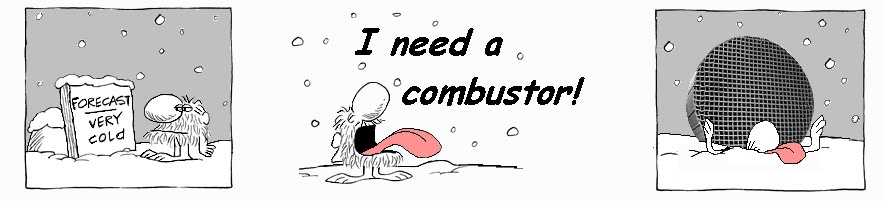
Is your woodburning stove ready for the next cold season? Think about it now.
Don't wait until the snow flys and the weather turn cold once again.
Now is the time to make sure your catalytic stove is in top notch order for the next burning season. Be sure to check your flue system and also make sure the stove's catalytic combustor is clean and ready to go.

All this month I will be posting articles on things that will help you be ready for the next burning season.
Now is the time to make sure your catalytic stove is in top notch order for the next burning season. Be sure to check your flue system and also make sure the stove's catalytic combustor is clean and ready to go.
All this month I will be posting articles on things that will help you be ready for the next burning season.
Subscribe to:
Posts (Atom)